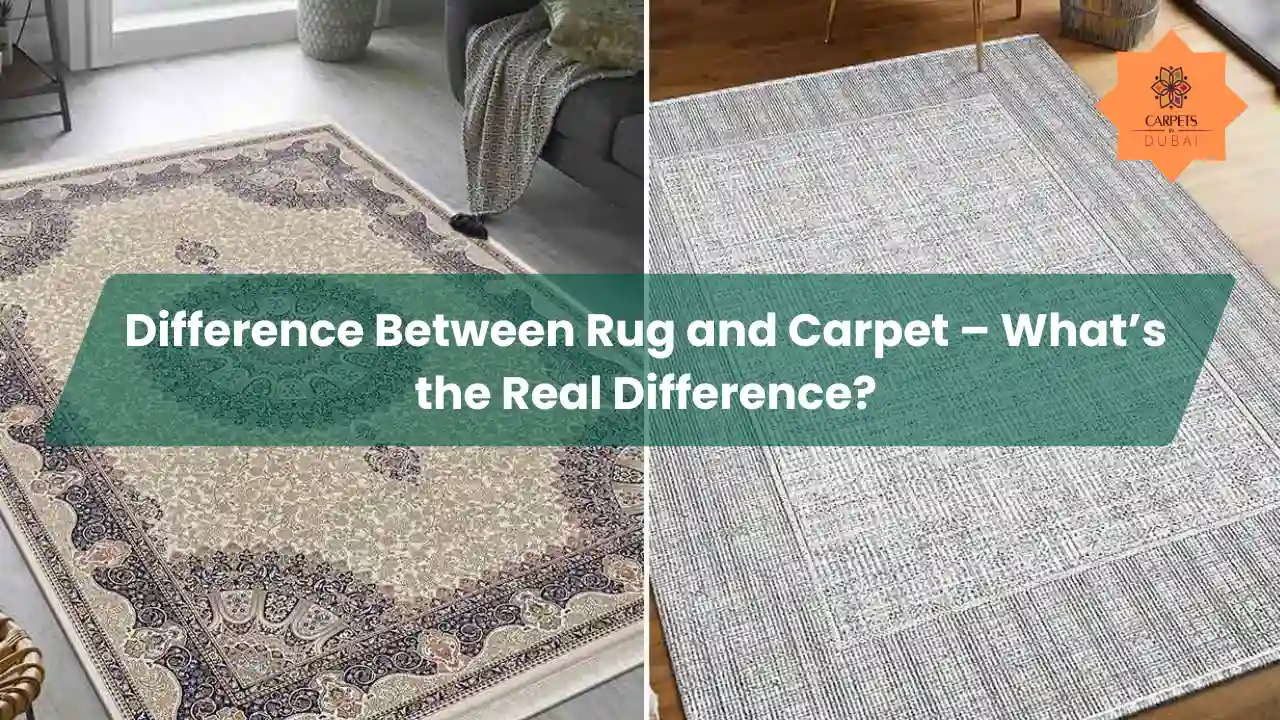
When people talk about the floor coverage, there are normally two options. One is the rugs and the other is carpet, but most people don’t know the real difference between the two. Both of them do offer warmth and comfort underfoot while styling the space. The similarities are many, but at the same time, these rugs and carpets have quite a lot of differences between them. Today we will tell you a comparison for difference between rugs and carpets.
What Is a Carpet?
The carpet you buy from the market is a large piece of fabric that is used for wall to wall coverage of an entire room. It is installed permanently with materials like adhesives, tack strips, and underlay. These are designed to offer entire floor surface coverage, provide insulation effect, reduce noise, and give the room a unified look.
What Is a Rug?
A rug is a piece of fabric that is movable and covers only a part of the room’s flooring. They come in a wide selection of sizes, shapes, and patterns, which you can use for defining certain areas. They add a decorative appeal to the interiors, offer warmth and comfort underfoot for walking, and protect the flooring underneath.
The Real Differences Explained
Now that you know primarily about carpet and rug, here is a full list of differences between the two.
1. Size and Coverage
The carpet offers complete room flooring coverage because you install it from one end to another for a seam-free appearance. The rug will cover only a certain part of the flooring available in small, medium, or large sizes. Their edges will still have the floors showing.
2. Installation and Permanence
A carpet fitting requires a professional installation service that will do proper measuring, accurate cutting, proper underlay placement, and secure edges. Once you install the floor carpet, its removal is hard and costly. A rug doesn’t need any professional service; instead, you can simply place it on the floor, adjust its position, and replace it any time you like.
3. Design Flexibility
There is a variety of choices for design with rugs as you can get them in bold patterns, traditional motifs, unique shapes, and abstract designs. With carpet, they usually work best in neutral and subtle styles as you need them for an entire room coverage. Getting them with dramatic pattern work will instead overwhelm the space.
4. Maintenance and Cleaning
A carpet will require you to perform a deep cleaning method. Numerous options include steam cleaning, shampooing, and a professional service. Due to the fact that they are fixed in place, their cleaning requires careful handling.
Rugs are easy to maintain because you can vacuum clean them daily, spot clean for stains, and dust them outside to remove dirt & allergens. In case you need much cleaning, you can simply take the rug to a professional cleaner.
5. Cost Differences
A carpet is generally much more expensive in comparison to a rug due to its high material cost, underlay option, and installation labor. A rug is priced differently based on its size, material used, and overall craftsmanship. There are affordable options along with handmade vintage rugs.
6. Comfort and Insulation
Both these rugs and carpets provide comfort, but in different ways. A carpet offers consistent softness for the room, it allows thermal insulation, and lowers the noise. With the rugs, you get softness in the area you place them, offer underfoot warmth in the targeted areas, and offer help with minor sound absorption.
7. Purpose and Function
A carpet is a functional piece of interior fit out décor as it serves for the entire area’s flooring. You get thermal insulation against changing temperatures, and they allow a uniform comfort. With rugs, you get to define different spaces in an open layout, highlight your furniture arrangements, and give texture to your interior theme.
8. Suitability for Different Rooms
Carpets are mostly used for areas like bedrooms, living rooms, offices, hotels, and large spaces. Rugs work best for living rooms, dining areas, entryways, and for layered styling in bedrooms.
Can You Use Both Together?
Yes, layering is definitely possible with rugs and carpets. You can layer a rug over a carpet to create a powerful design trend. It lets you add color to your neutral carpet, helps create a visual contrast, and liven up the space without the need for renovation.
Final Thoughts
The difference between rugs and carpets includes their area of coverage, installation ease, design choices, and overall purpose. Neither can be said to be better than the latter as they both offer different design roles for your interior décor. You need to understand these differences to make a smart decision on choosing which product suits your lifestyle and space’s needs.